
Clear evidence that onchain money works in everyday life
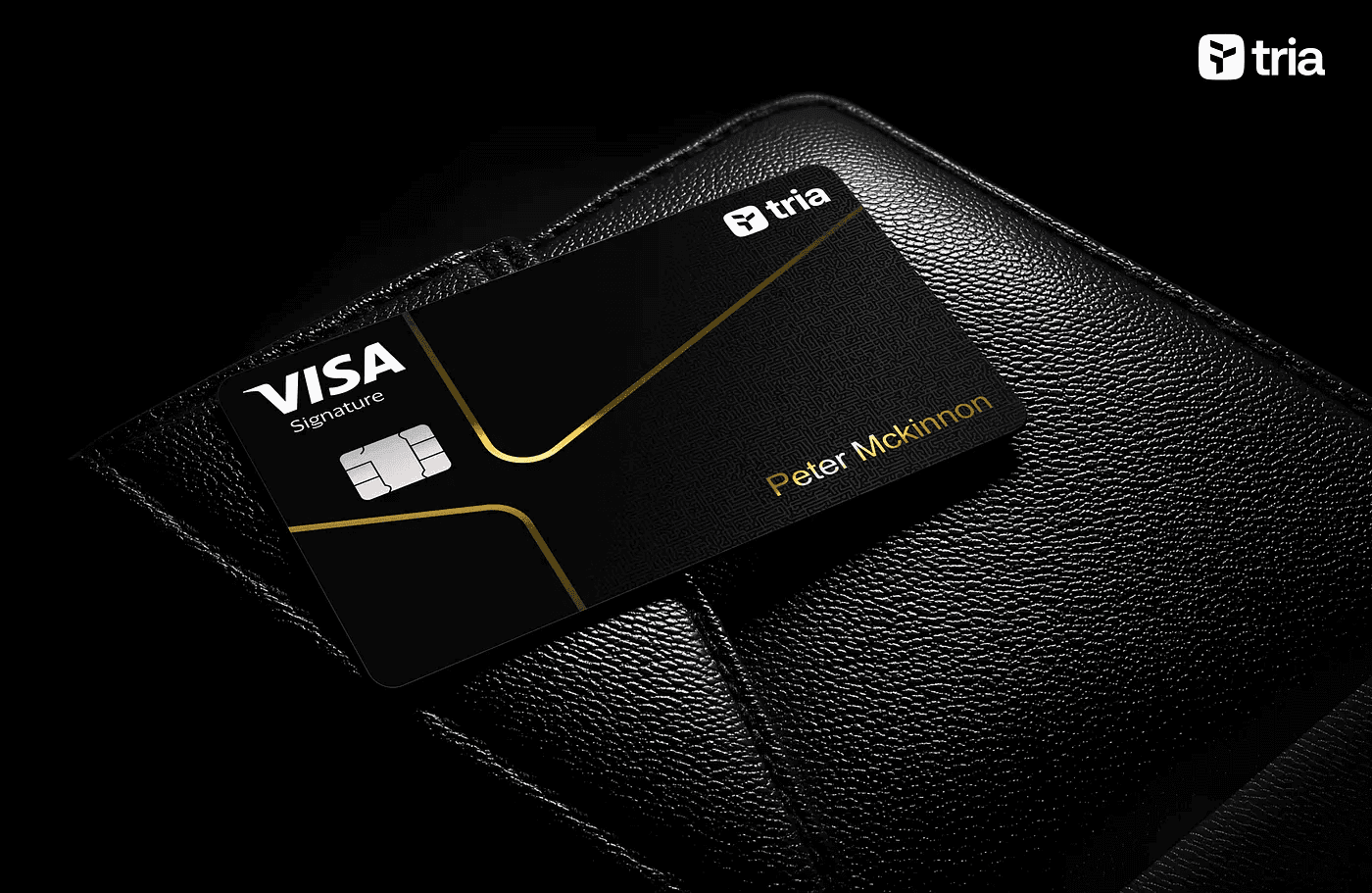
For people who travel, the difference becomes obvious fast. Most bank cards charge foreign exchange fees in the 2–4% range on every purchase. Tria routes cross-border spend through onchain execution, keeping fees at or under 1%. In many cases, spending abroad with Tria can be cheaper than using a local bank card.
In its first 90 days, this everyday usage pushed over $20M in real onchain spend and settlement through Tria. The trajectory lifted sharply on November 19, when users moved $1.12M in a single day. Most consumer Web3 products take quarters or years to reach that level of daily spend.
Today, Tria is used by over 50,000 people across multiple regions worldwide, supported by 6,000+ ambassadors who help drive education, adoption and community alignment. This is what fast global uptake looks like when a product removes friction at every step. People feel the difference right away.
Across the broader ecosystem, BestPath has now processed more than $70M in transactions. The volume moving through partners and protocols shows the same pattern we see inside the app. When routing is reliable and self-custodial from end to end, usage scales on its own.
Self-custody that people actually use
Crypto has always promised ownership, but the reality has been complex. Wallet selection, bridges, chain switching, gas decisions and settlement risks have made everyday self-custody feel like a specialist workflow. People who wanted control accepted friction, and people who wanted simplicity gave up custody.
Tria removes this tradeoff completely. Assets stay in the wallets people trust. Users can spend, trade and move value with the flow of a modern banking app. The mechanics of chains, gas and routing operate beneath the surface so that users don’t need to think about them.
The first three months make something very clear. When self-custody becomes seamless, people use it instinctively. They don’t need to adopt new habits or restructure how they hold assets. They simply continue their financial lives with more control and less overhead.
A community that drives real usage
Momentum at this pace has clear roots. Weeks before the $20M milestone, Tria’s community round on Legion drew $66.7M in commitments for a $1M allocation. More than 4,500 people applied and 1,747 were accepted. Allocation focused on contribution, including early cardholders, testers, creators, translators, ambassadors and partners who supported the mission long before the metrics appeared.
These same contributors are now driving real volume across the platform. Usage and ownership are rising together, which is a rare and healthy form of network growth. With a global points system launching soon that rewards people for the everyday actions already powering Tria, this momentum is positioned to compound quickly.
What the milestone shows
Over $20M in the first three months of closed beta confirms that Tria’s approach is working. People want a system that makes self-custody feel as natural as paying with a bank card. They want to spend directly from the assets they hold. They want reliable, cross-chain execution without bridges they have to manage or manual routing decisions. They want crypto that behaves like money.
Most products address one part of this and compromise on others. Tria redesigns the entire flow from wallet to spend and removes friction at each step. The milestone shows that this unified approach works and scales quickly because the experience speaks for itself.
The infrastructure powering the experience
The simplicity users feel on the surface depends on serious infrastructure underneath. Tria runs on BestPath AVS, the routing and settlement engine that executes payments, swaps and cross-chain flows across EVM chains, SVM, Cosmos IBC and Bitcoin L1.
Every action becomes an intent, whether it is a tap, a swap or a transfer. A network of solvers competes to execute that intent along the most efficient route available. There are no manual bridges, no centralized custody and no guesswork for the user. Execution becomes deterministic and automated. The system handles the complexity so users never need to.
BestPath is integrated with over 70 protocols and is already used by ecosystems such as Arbitrum Orbit, Polygon AggLayer, Movement, Injective, Morph and Merlin. This infrastructure turns fragmented chains into a coherent network and it is the foundation that makes Tria’s adoption curve rise so quickly.
How people are using Tria today
The behavior behind the volume is consistent. People want to stay fully self-custodial without extra work. They want to spend globally without rebuilding their setup every time they travel. They want multi-chain access without managing networks manually. They want one predictable place to handle their financial life.
Top-ups, cross-border card spend, swaps routed through BestPath and steady daily purchases are growing fastest. None of these actions require users to think about networks or routing. Everything works without added effort.
This marks the shift from crypto as a specialist environment to crypto as a usable financial layer for everyday life.
A checkpoint and a beginning
The $20M milestone is significant, especially this early, but it is only the beginning of a broader trajectory.
On the consumer side, Tria is expanding card access to more regions, supporting the top 1,000 assets for direct spend and introducing yield, automation and credit features while maintaining full self-custody.
On the infrastructure side, BestPath AVS is advancing toward becoming the default network for onchain payments, liquidity routing and execution for autonomous agents.
On the ownership side, staking, loyalty and governance will give users a meaningful voice in how the network evolves.
The mission remains simple. Digital money should be usable, global and self-custodial, and the people who rely on it should benefit from its growth.
Built together. Used together. Moving forward together.
To everyone using Tria, recommending it, testing it and integrating it, thank you. To the over 50,000 people and 6,000 ambassadors supporting this platform across continents, this milestone reflects your belief in what this system can become.
And all of this is still happening in closed beta. The foundation is in place, the momentum is real, and the next phase is already taking shape.
Onchain money should work everywhere. With Tria, it finally does.