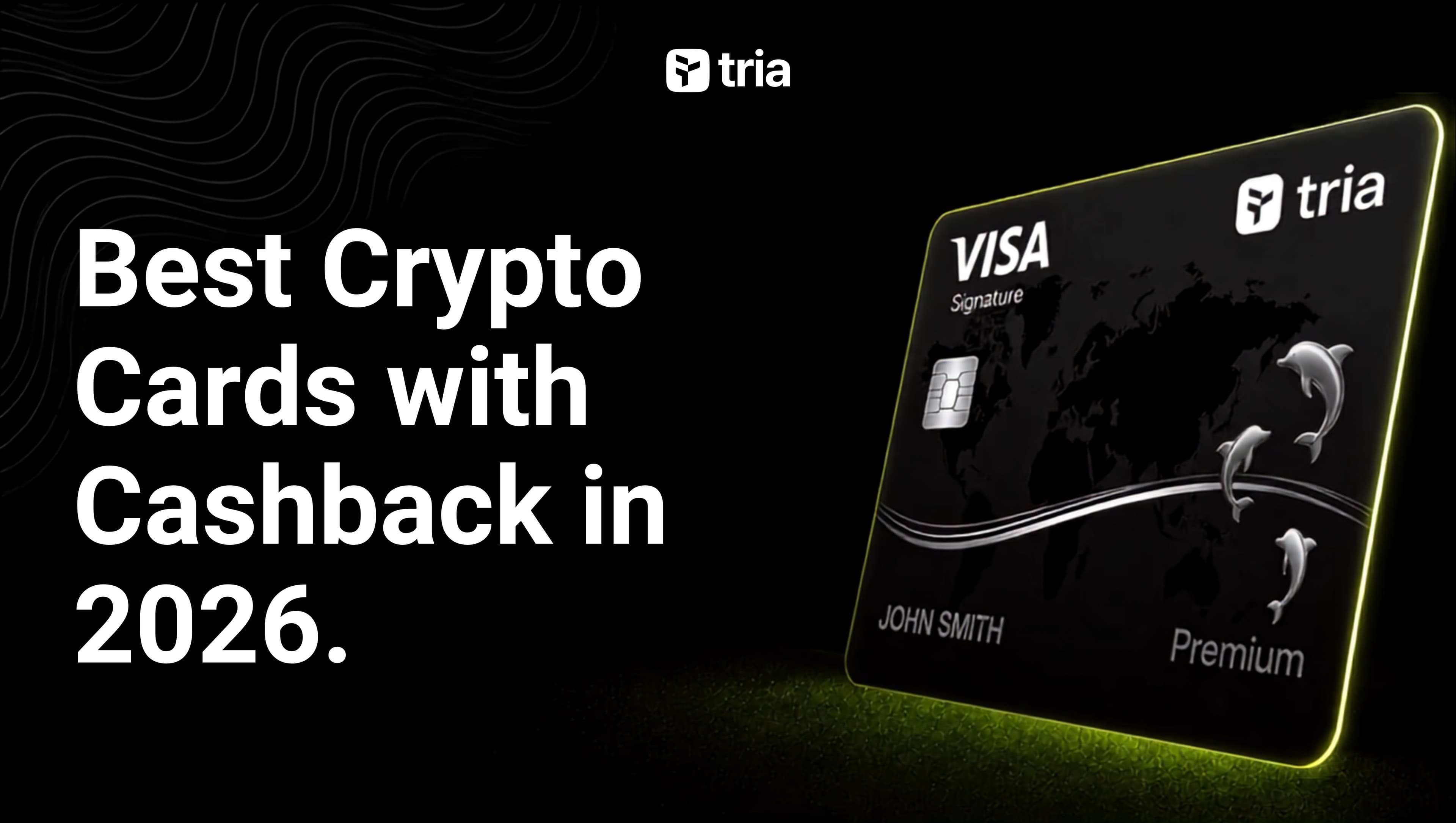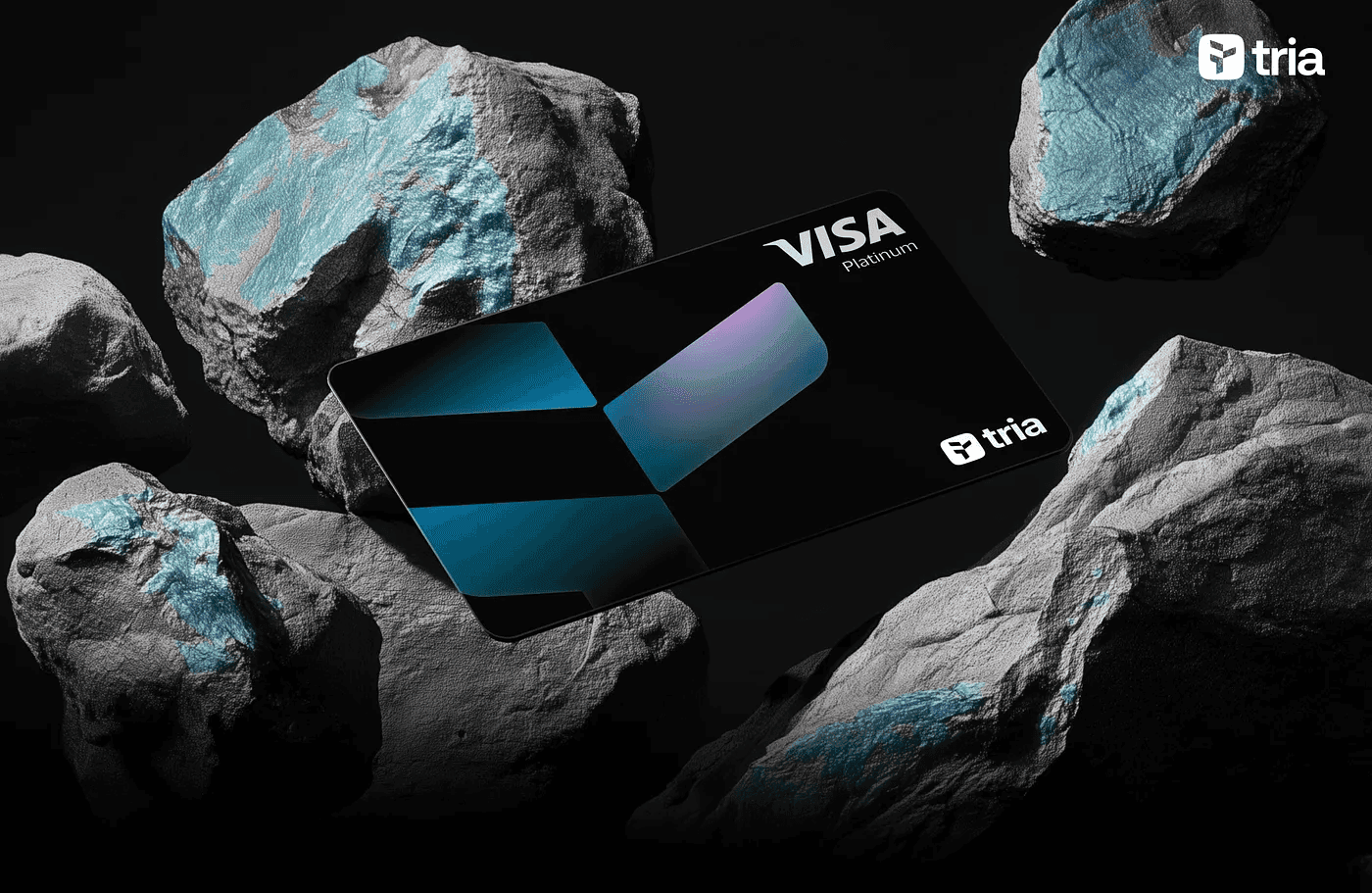

Starting now, you can top up your Tria card with Bitcoin (BTC) and spend anywhere Visa or Mastercard are accepted — while your BTC remains self-custodied the entire time. There are no exchange deposits, no CeFi loan accounts, and no “park it here and trust us” step in the middle.
This launch is for people who want to live on Bitcoin without betraying what Bitcoin stands for.
Bitcoin is hard money. Spending it has been way too hard.
Bitcoin is the world’s hardest money — a store of value, an inflation hedge, digital gold. But actually using it has usually meant doing the opposite of what Bitcoiners believe in.
To pay for life with BTC, you’ve probably had to move coins onto an exchange, wait for transfers, sell to fiat, withdraw to a bank account, and then finally swipe a card. In that process you add friction, delays, and a lot more counterparty risk than you wanted.
Tria exists because we don’t think “sovereign money” should depend on a chain of custodians just to buy groceries.
Our goal is simple: you should be able to live on Bitcoin and keep your keys the whole time.
Bitcoin top-ups, with self-custody by default
With this release, Bitcoin becomes a first-class top-up asset in Tria.
You hold your BTC in self-custody. When you want to spend, you top up your Tria card with Bitcoin and use it like any other card — online, in-store, or while you travel. Throughout that entire flow, the core principle doesn’t change: your BTC remains self-custodied. Topping up doesn’t quietly turn it into someone else’s asset.
There’s no separate “BTC product” or special account you have to move into. You don’t have to maintain one setup that matches your Bitcoin values and another just to have a working card.
It’s one continuous experience: your Bitcoin, your keys, your card.
BTC now sits alongside the top 1,000 most liquid assets we already support on Ethereum, Base, Polygon, BNB Chain, Arbitrum, and Optimism.
Why the self-custody part actually matters
Most Bitcoin cards on the market still ask for the same tradeoff: send us your BTC and we’ll make it spendable. Once you do that, you’ve effectively swapped self-custody for a promise on someone else’s balance sheet.
That’s convenient right up until it isn’t.
Tria is built to avoid that tradeoff. We don’t want you to choose between “I can actually use my BTC” and “I actually control my BTC.” The whole product is designed around the idea that you should be able to keep holding Bitcoin the way you want, and simply have a card that knows how to work with it.
Instead of giving up control so your money can move, you keep control and let the card conform to how you hold your money.
Who this is for
If you treat Bitcoin as long-term savings, Tria lets you stay committed to that horizon without changing how you hold it. You can keep stacking and securing your BTC exactly as you do today, and when real life shows up — rent, flights, a surprise bill — you simply top up your card and go, without moving your savings into a custodial card account just to spend.
If you’re dealing with inflation, capital controls, or fragile local banks, Tria gives you a way to use Bitcoin as your primary store of value while still operating in local currency day to day. Your BTC can stay where you trust it; your Tria card becomes the bridge that turns that self-custodied balance into everyday payments, without rebuilding your financial setup every time you cross a border.
BTC first — and the rest of your stack still fits
This release is all about Bitcoin, but it lands inside an ecosystem that already supports the top 1,000 most liquid assets across Ethereum, Base, Polygon, BNB Chain, Arbitrum, and Optimism. If you get paid in stablecoins or trade altcoins, you can use those with Tria in the same self-custody, top-up-when-you-want pattern.
Bitcoin is now a first-class citizen in that model.
One card, one mental model: hold what you want to hold, the way you want to hold it, and make it usable when you’re ready to spend.
How to start using Bitcoin with Tria
If you already use Tria, open the app, connect your Bitcoin setup if you haven’t yet, select BTC as your top-up asset, and start using your card. Your Bitcoin stays self-custodied the whole way.
If you’re new, sign up or download the app, complete onboarding where required, connect your wallets, and bring your BTC into a setup that doesn’t ask you to compromise between sovereignty and usability.
You shouldn’t have to choose between holding your own Bitcoin and having a card that works everywhere.
Now you don’t.
Your Bitcoin. Your keys. Your card.